Château de Châteaudun: Medieval Power and Renaissance Grace
Set high above the plains of Eure-et-Loir, the Château de Châteaudun stands as a quiet guardian of France’s layered past. Often overlooked in favor of the Loire’s more celebrated estates, this château rewards the discerning traveler with depth, dignity, and artistic richness. Its stones speak not of spectacle alone, but of endurance of faith, power, and refined transformation across centuries. This chapter invites you to step gently into its story, where medieval strength meets Renaissance grace.
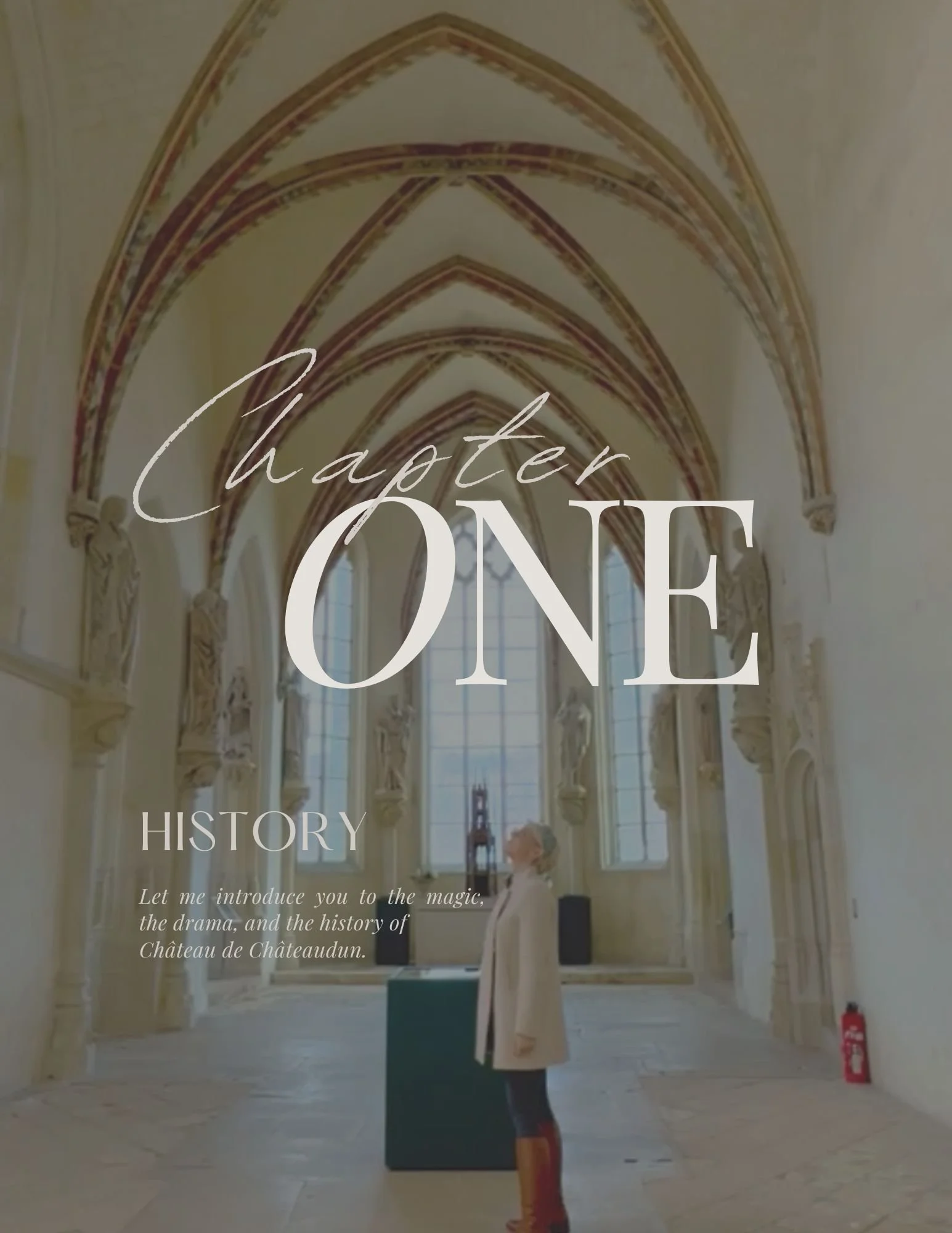
Château de Châteaudun - A Majestic Legacy of History and Artistry
The Untold Secrets of Château de Châteaudun
In the serene landscape of Eure-et-Loir, perched upon a rocky spur that commands the surrounding plains, stands the Château de Châteaudun. This imposing fortress, often overshadowed by its more famous Loire Valley cousins, is a testament to the grandeur of French medieval and Renaissance architecture. Its rich and layered history unfolds like a dramatic saga worthy of the finest epic.
Monuments of France
The Dawn of a Fortress
Long before the Romans claimed Gaul, a Celtic oppidum, or fortified settlement, graced the site of what would become Châteaudun. The very name of the town derives from the Latin castellum, meaning castle, and the Celtic dunum, meaning fortified place. With its commanding view over the Loir River, this ancient stronghold was strategically positioned to dominate the surrounding landscape.
In the year 584, Bishop Gregory of Tours mentioned the stronghold, highlighting its longstanding importance. By the early 10th century, the Counts of Blois had taken ownership, only to see their stronghold ravaged during the Norman invasions. Thibaud I of Blois, known later as Thibaud the Cheat, emerged from this turmoil, and it was under his lineage that the formidable keep was constructed between 1170 and 1190. This imposing cylindrical tower, standing 31 meters high with walls 4 meters thick, marked the beginning of Châteaudun's transformation into a formidable fortress.
A Fortress Transformed
By 1439, the Château de Châteaudun had caught the attention of Jean de Dunois, a figure of profound historical significance. Known as the Bastard of Orléans, Jean de Dunois was a celebrated companion of Joan of Arc and a key figure in the Hundred Years' War. His arrival marked the beginning of a remarkable transformation.
A Residence of Beauty and Splendor
Jean, born in 1402, was the illegitimate son of Louis I of Orléans and Mariette d'Enghien. Raised amidst the political turmoil of the time, Jean's early years were defined by the strife between the Armagnacs and Burgundians. The assassination of his father and the ensuing chaos in France propelled Jean into a life of warfare and diplomacy. By 1415, he had risen to prominence, taking part in crucial battles that turned the tide of the war in favor of the French.
With the war over and his half-brother Charles of Orléans freed from English captivity, Jean de Dunois was rewarded with the Château de Châteaudun. Determined to reshape the austere fortress into a grand residence befitting his status, Jean embarked on a series of ambitious renovations.
Jean de Dunois's vision for Châteaudun was one of elegance and refinement. He retained the grand keep, crowned it with an imposing slate roof, and commenced work on a grand Gothic-style main building. By 1451, he had begun constructing a Holy Chapel to house a relic of the True Cross, an endeavor that would result in one of France's rare Holy Chapels.
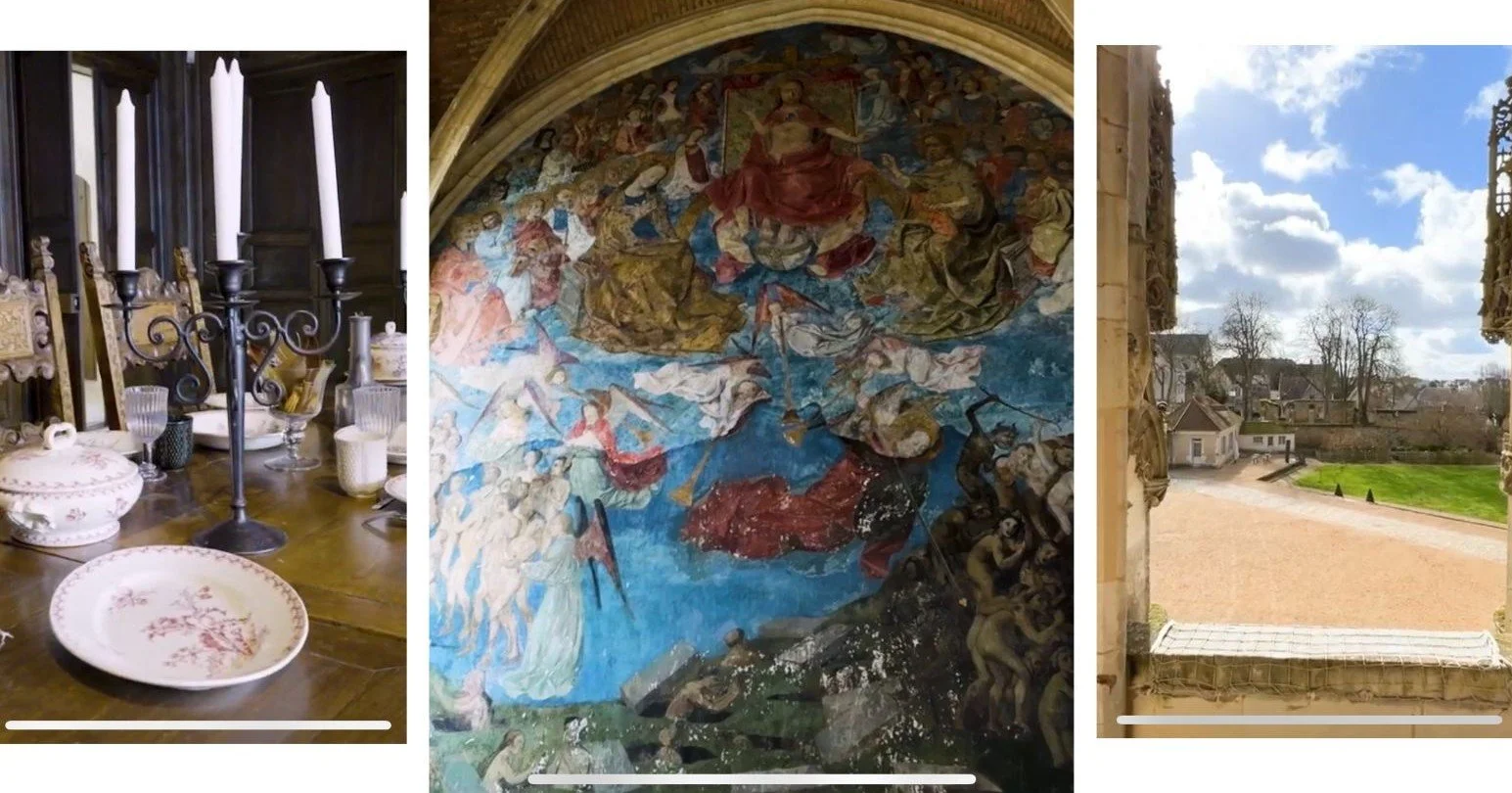
The chapel, built in stages from 1451 to 1493, is a marvel of Gothic architecture. Its austere exterior belies the beauty within: a collection of statues, including a Virgin and Child, and a fresco depicting the Last Judgment, contribute to its spiritual and artistic significance.
Jean's residence at Châteaudun was further embellished with a Renaissance-style wing added in the 16th century, known as the Longueville wing. This extension, characterized by its ornate facades and sumptuous interior, marks the transition from Gothic to Renaissance aesthetics. The Longueville wing houses a grand loggia staircase, its decor reflecting the Italian Renaissance influence, with motifs of angels, birds, and antique columns.
The Tapestry of Tancred and Clorinda
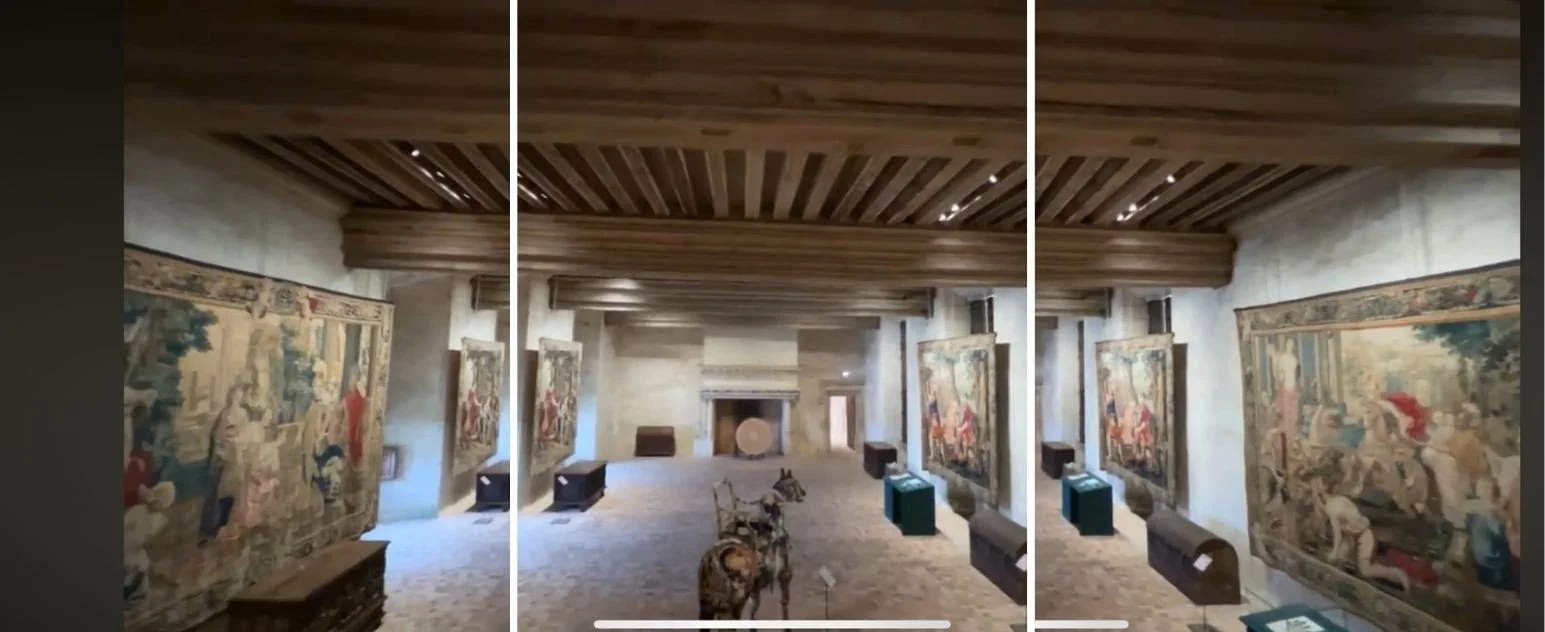
Among the treasures of Châteaudun is its remarkable collection of tapestries. The castle is home to one of France's second-largest collections of antique tapestries, second only to the Mobilier National. This includes a series depicting "The Story of Tancred and Clorinda," a masterpiece woven between 1655 and 1690 by the workshops of the Faubourg de Saint-Germain.
These tapestries, woven from wool and silk, illustrate scenes from Jerusalem Delivered, an epic poem by the Italian poet Torquato Tasso. The series captures pivotal moments from the story of Tancred and Clorinda, including their fateful encounter, Clorinda's baptism, and the construction of a mausoleum in her honor. Each tapestry panel, meticulously crafted from designs by Michel Corneille, tells a part of the narrative with vivid colors and intricate details. The tapestries were acquired by the State from 1967 to 2012 and were recently restored to reveal their vibrant hues.
A Garden of History
In addition to its architectural marvels and art treasures, Châteaudun features a medieval-inspired garden. Laid out in the early 2000s, this garden at the foot of the keep reflects the medieval garden's symbolism. With 150 plant species known from the Middle Ages, including medicinal herbs, dye plants, and vegetables, it offers a glimpse into the horticultural practices of the past. This garden complements the castle's historical ambiance and provides a tranquil retreat for visitors.