Part Three, Steal My Itinerary!
My content is completely free, no paywalls or subscriptions. Just like those old-school ‘90s blogs we used to love. 🥰
A Morning at Abbaye de Fontenay
The warmest day of the week was Wednesday.
The forecast was pushing close to 70 degrees here, and that was part of how I narrowed down this location in the first place. When I was comparing weather reports across regions, even a few degrees mattered… I actually was originally considering properties north in Normandy. But slightly warmer mornings meant earlier outings and less pressure to be out in the afternoon heat with French bulldogs.
I knew I didn’t want to be out in full sun later in the day. My plan was simple:
Arrive at the abbey right when it opened
Take my time
Return home early afternoon
Spend the rest of the day back in the garden
“When you’re building itineraries this way, especially in rural France, one thing is critical: double and triple check opening hours. ”
Many sites close for lunch in the off-season. Staffing is limited. Ticket offices may be run by one or two people. So I structured the day around the opening time.
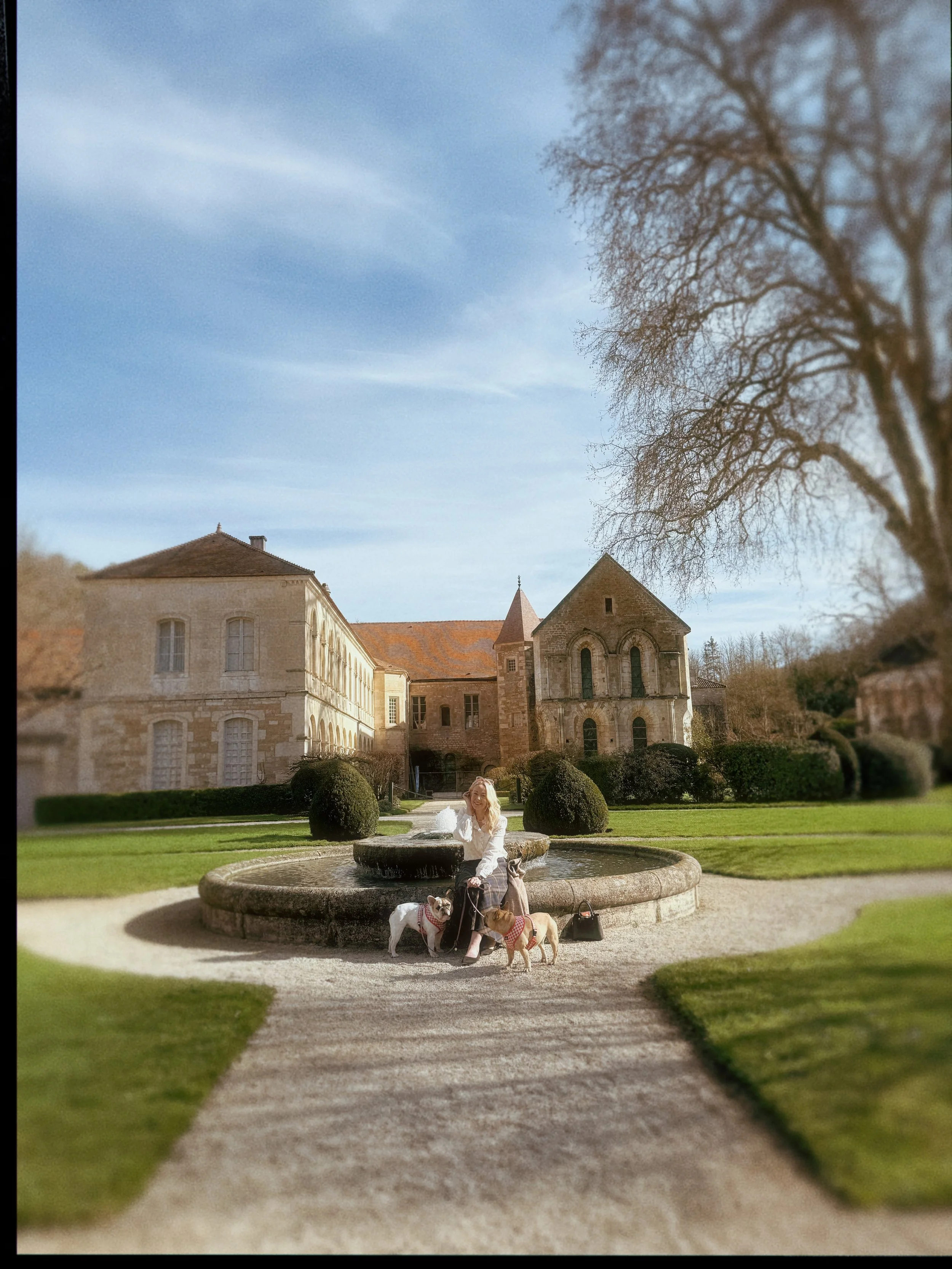
About 30 minutes from the cottage is the Abbey Fontenay, a UNESCO World Heritage Site. Going there alone was worth this entire trip… I STILL can’t stop thinking about it! More on that below…
A Bakery Stop in the Middle of Nowhere
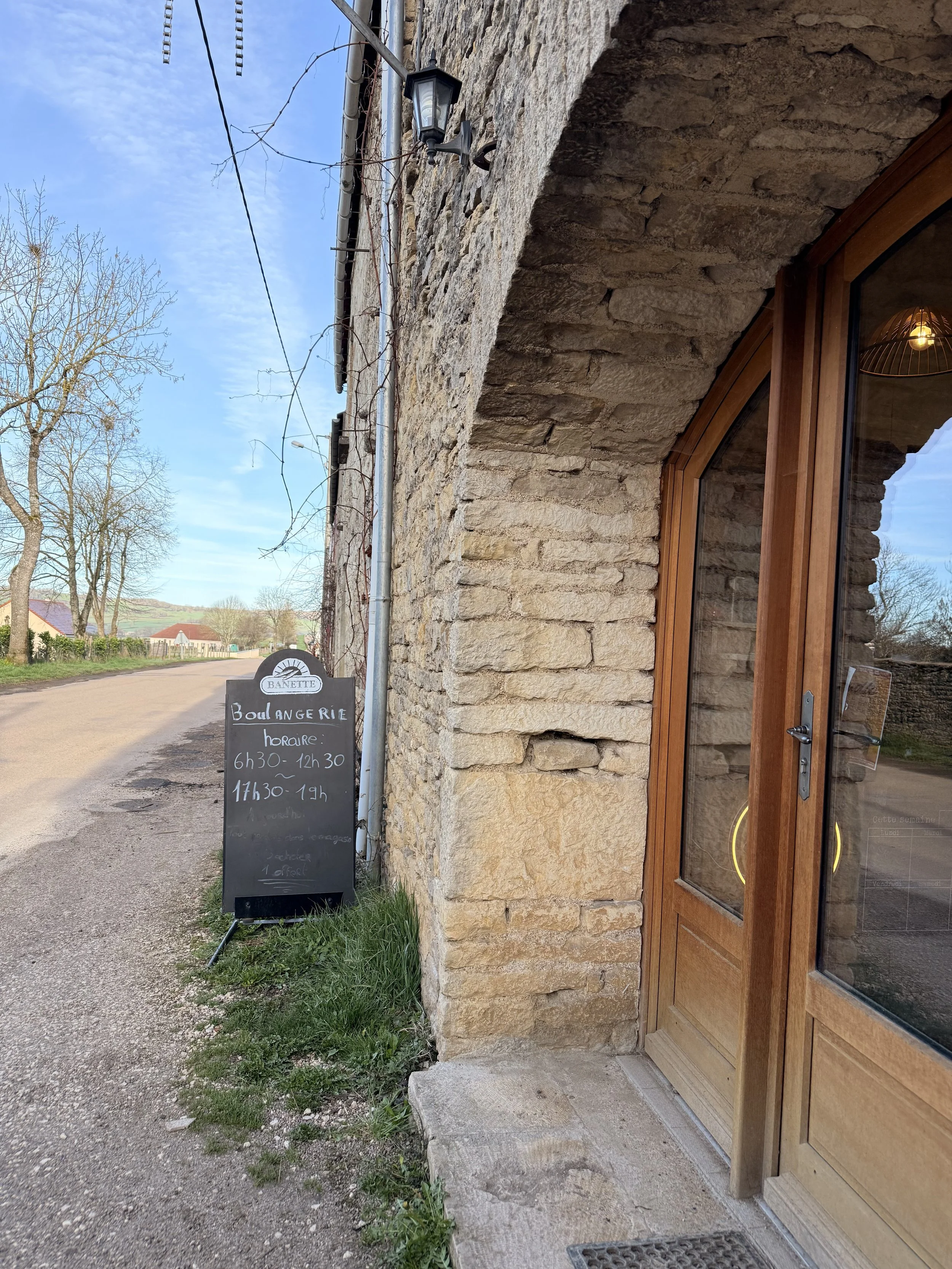
The reviews for this bakery were unreal! I had to stop and I am SO glad I did!
There are very few restaurants in that immediate area. It’s rural Burgundy. But while planning my driving route, on Google Maps, I noticed a bakery in a tiny village… essentially the only business in town… with extraordinary reviews. So I added it to the plan.
Stop at the bakery first.
Pick up something indulgent.
Then head to the abbey.
I don’t usually eat pastries like that anymore, but sometimes the context matters. A small village bakery in Burgundy on a sunny Wednesday morning feels like the right context. Ha!
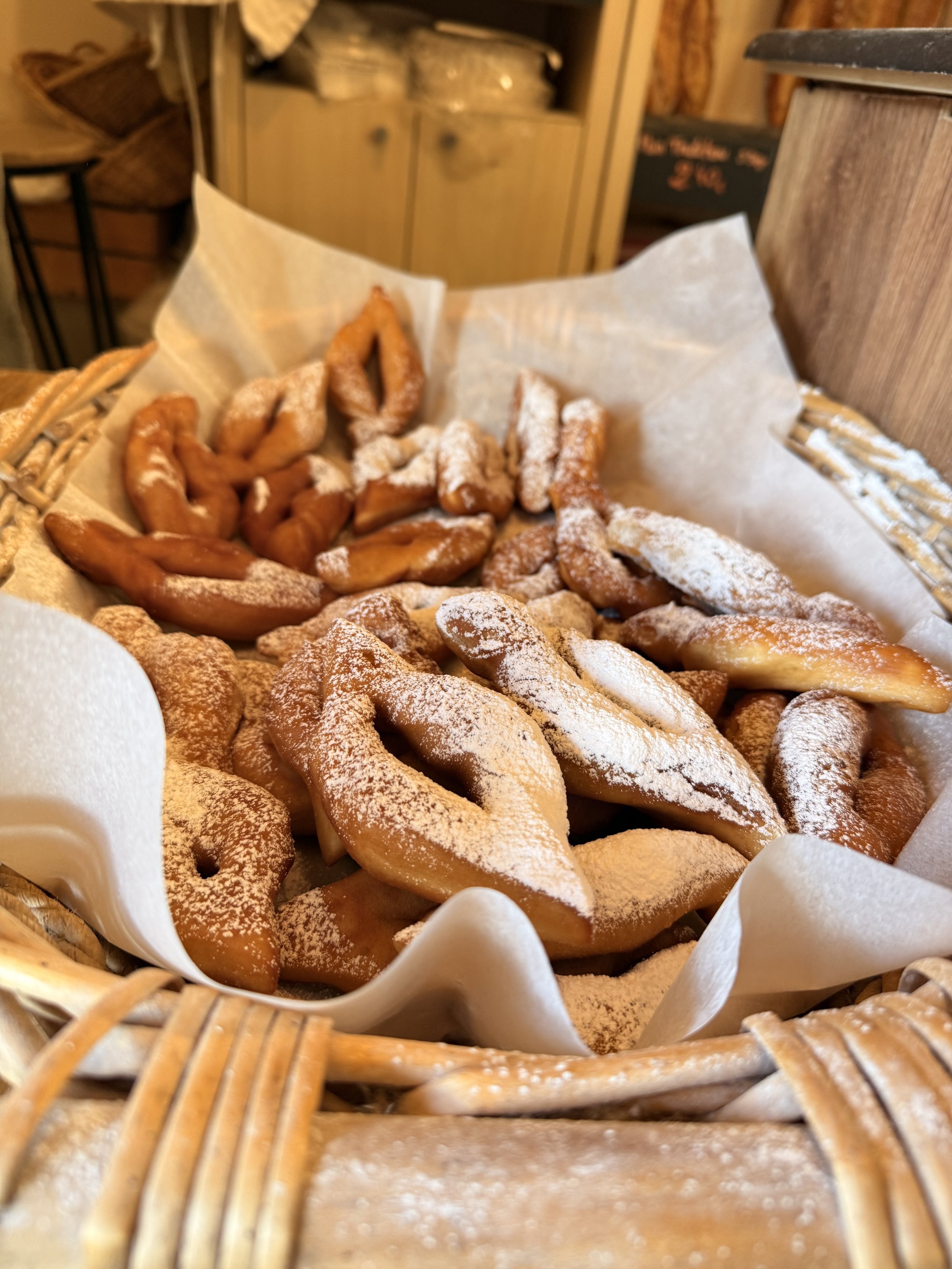
I didn’t even leave the parking lot before the girls and I finished five of these… they taste like powdered doughnuts but WAYYYYYYY better. Omgoodness, I am still dreaming about them!!
The gentleman in the bakery was the father of the owner. He said his son starts work at midnight to prepare everything for the day by hand, and he goes to bed while Dad helps the customers in the morning.
When traveling regionally, it’s important to try the things you DON’T recognize… they’re regional specialities. Having lived in Burgundy for a couple years, when I saw their hand-sized gougeres, I HAD to get one. And it did not disappoint - full of cheesy goodness.
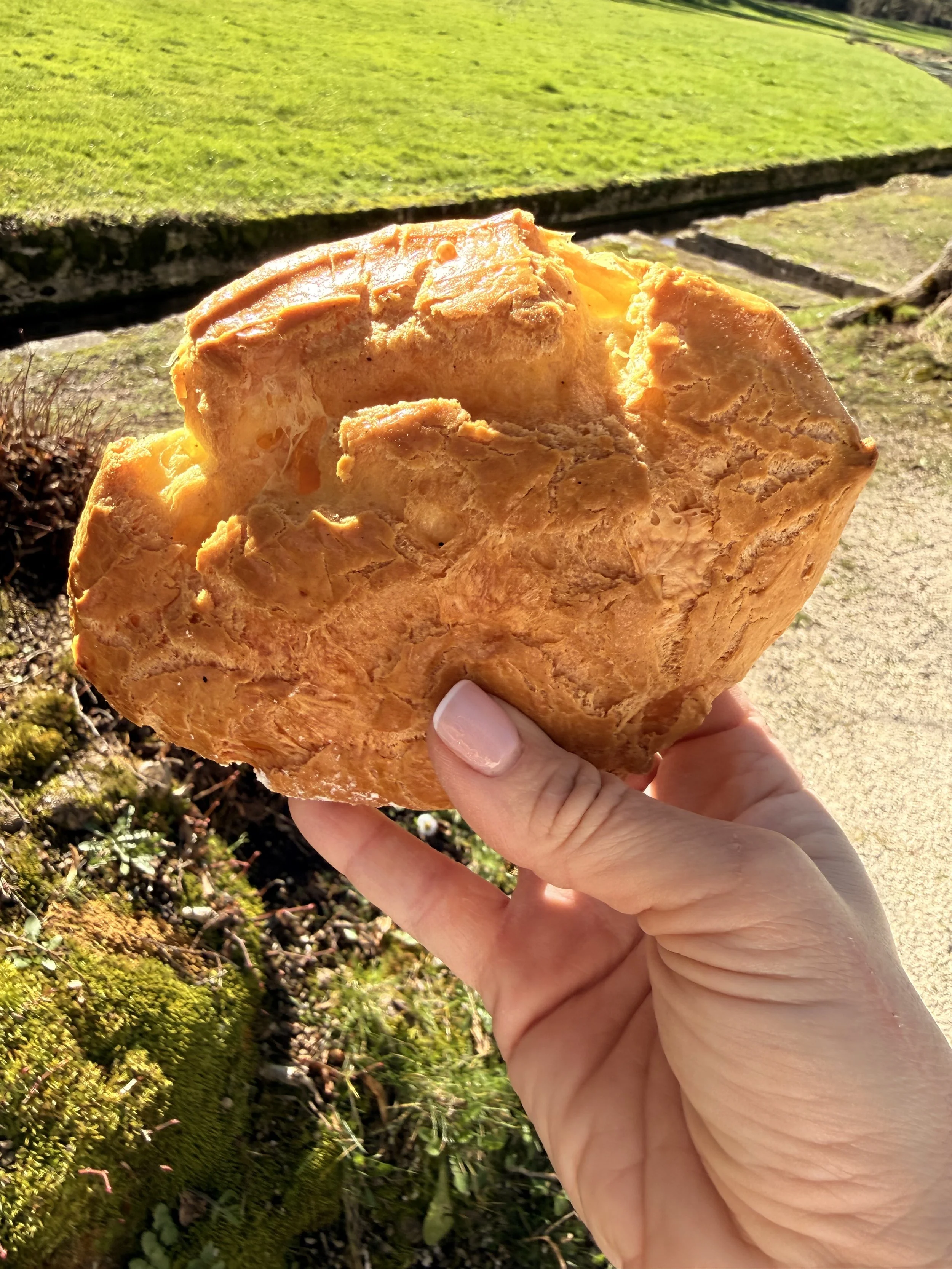
Absolutely enormous gougere and it was soooooo ridiculously good.
Bakery: Le fournil des Bottiens
Address: 13 Rue des Bottiens, 21500 Viserny
The Story of Abbaye de Fontenay
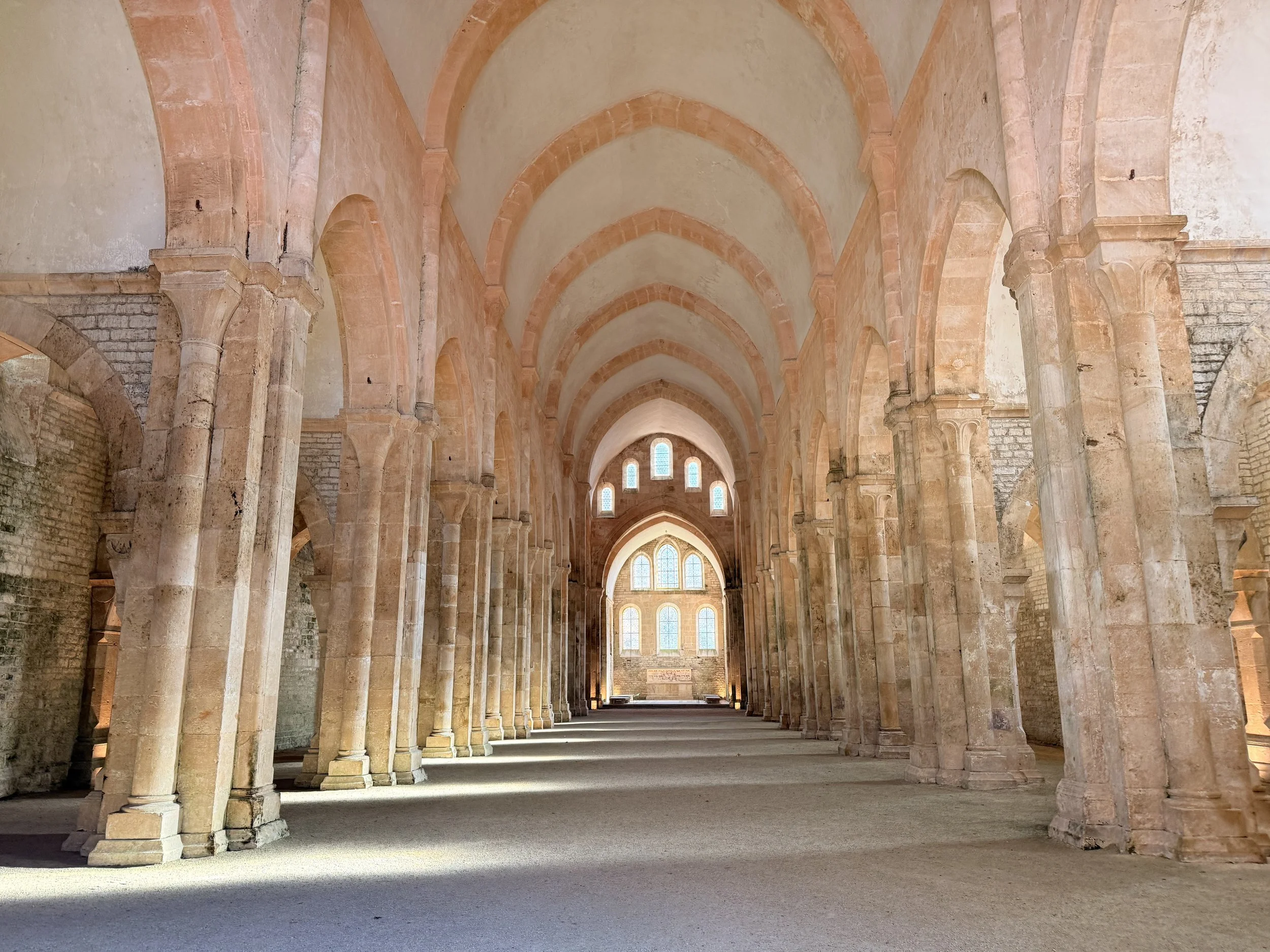
The entire property is dog-friendly!
The Abbaye de Fontenay was founded in 1118 by Saint Bernard of Clairvaux.
He was one of the leading figures of the Cistercian reform movement — a movement that sought to return monastic life to simplicity, manual labor, and spiritual discipline, away from the increasing wealth and ornamentation that had taken hold in other religious orders.
The Cistercians chose isolation deliberately. They built in valleys. Near water. Away from cities. In places where monks could live in rhythm with nature and their faith.
Fontenay was one of the earliest Cistercian foundations.
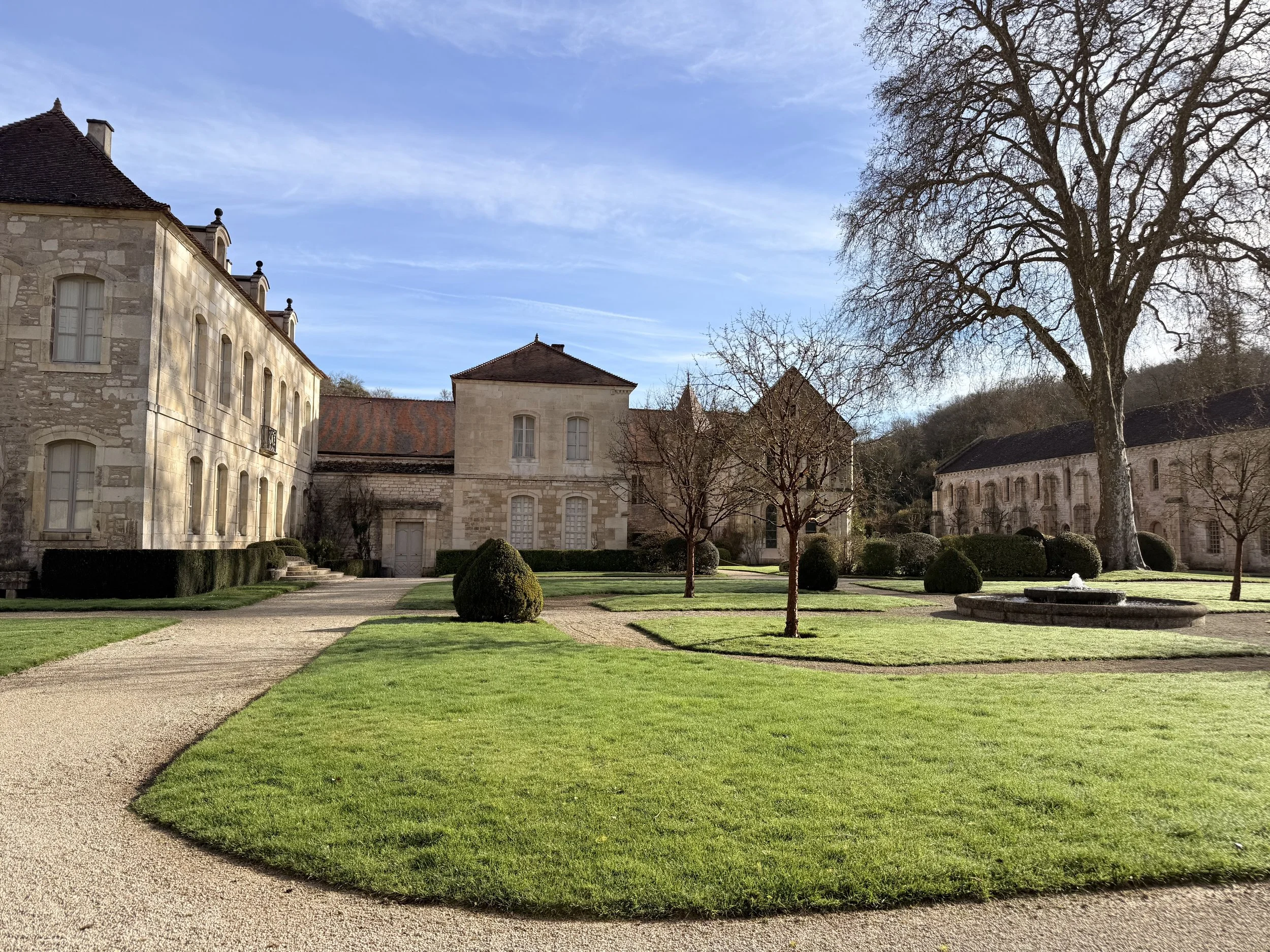
Everything about this entire space exudes calm, quiet, tranquility, peace, and beauty. I could have stayed for days…
When you enter the grounds, the architecture immediately reflects that philosophy. There is no flamboyant Gothic excess. No decorative overload. The church, completed in 1147 and consecrated by Pope Eugene III, is austere, symmetrical, and proportioned with precision.
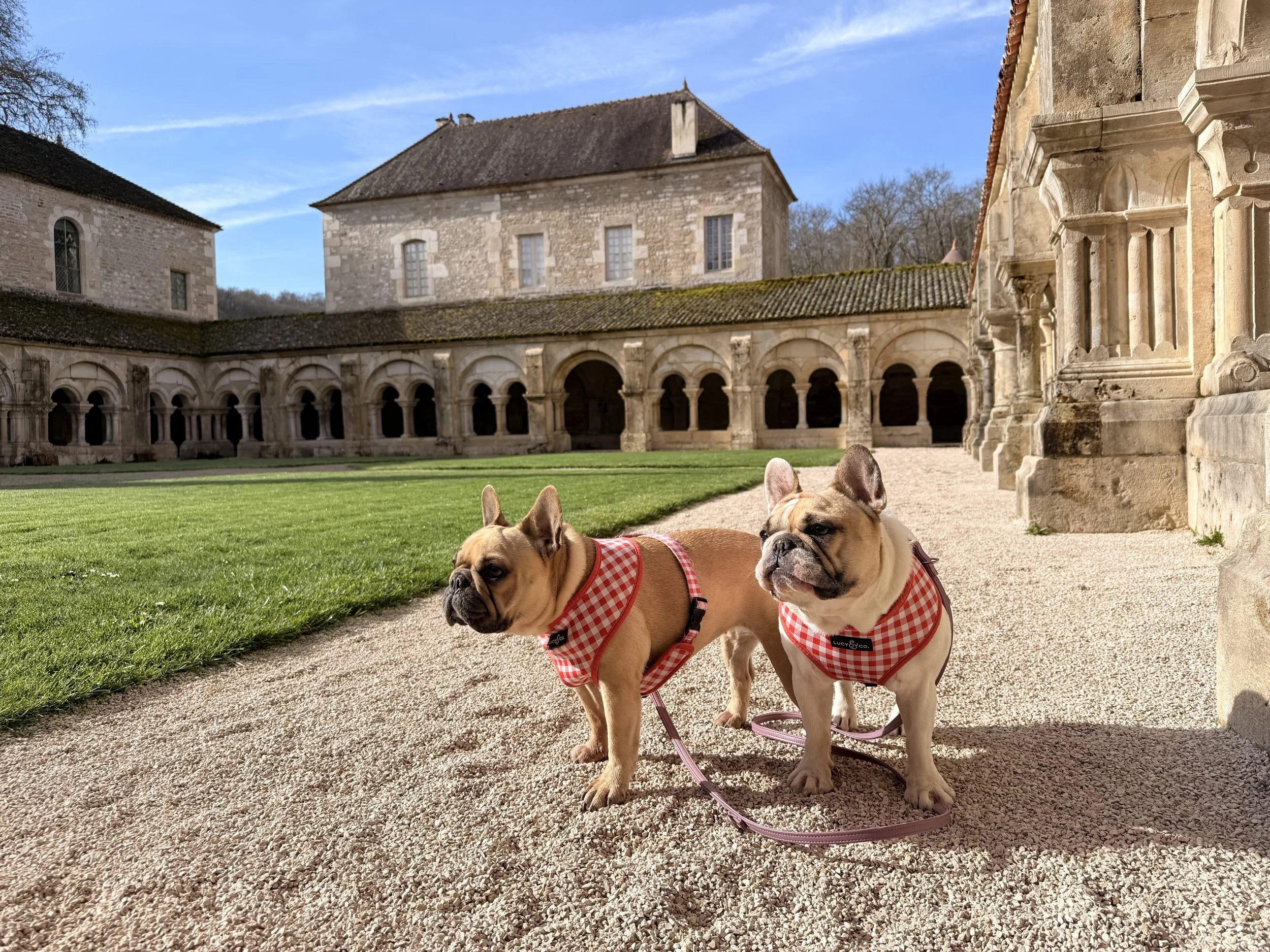
I still can’t believe the entire place is dog-friendly! The gardens are stunning and it was so special to share this experience with the girls. I’d love to come back when the roses are blooming.
The abbey complex includes:
The church
A cloister
A dormitory
A chapter house
A scriptorium
A forge
The forge is particularly significant. The Cistercians were not only religious reformers — they were economic innovators. At its height, Fontenay operated as a highly organized agricultural and industrial complex. The monks developed ironworking facilities and water management systems that were advanced for their time.
This was not a fragile, contemplative retreat. It was a functioning, productive, self-sustaining community.
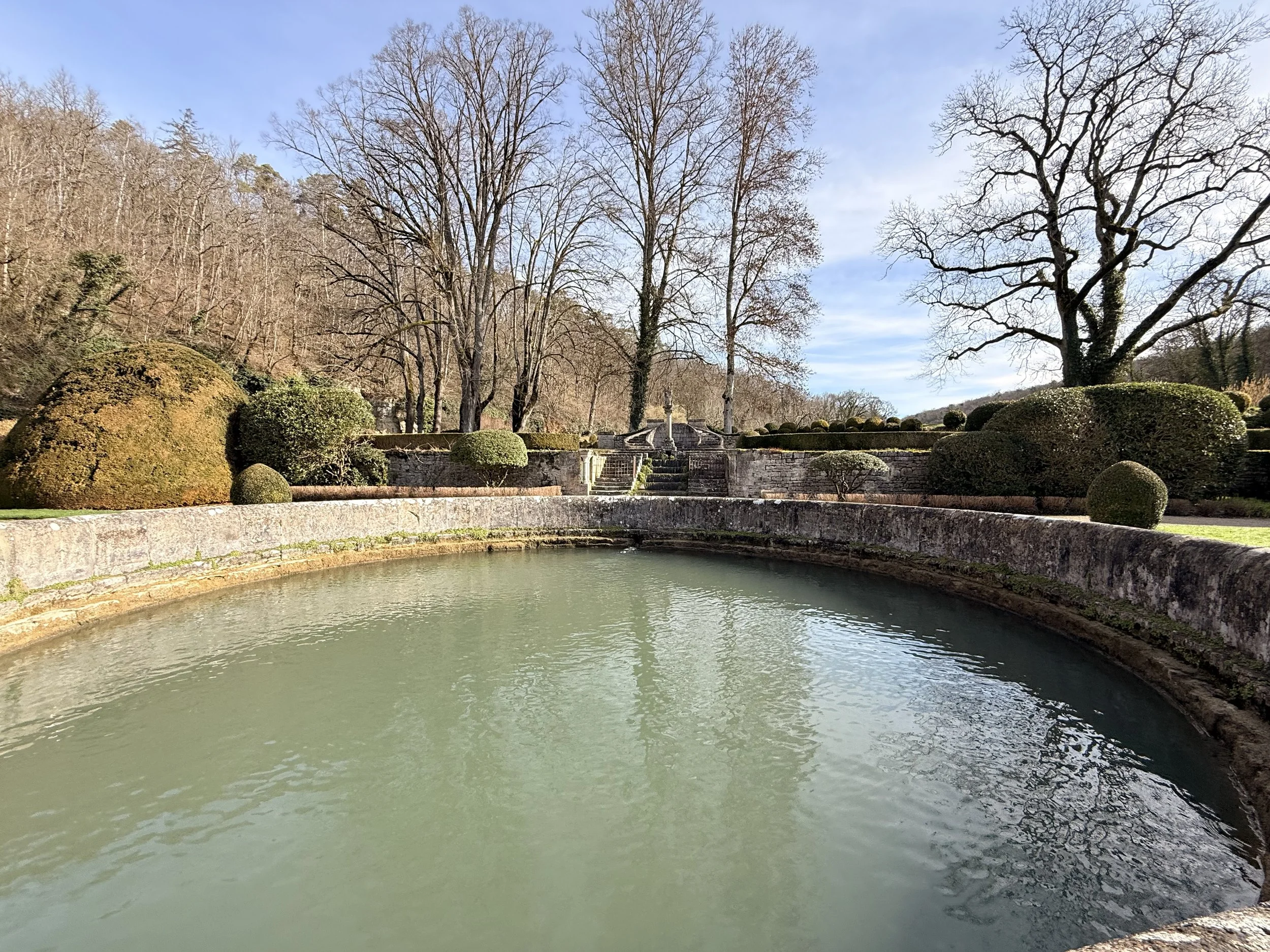
During the French Revolution, the abbey was sold as national property and ceased to function as a monastery. It later passed into private hands in the 19th century and was carefully restored.
Today, it is remarkably intact.
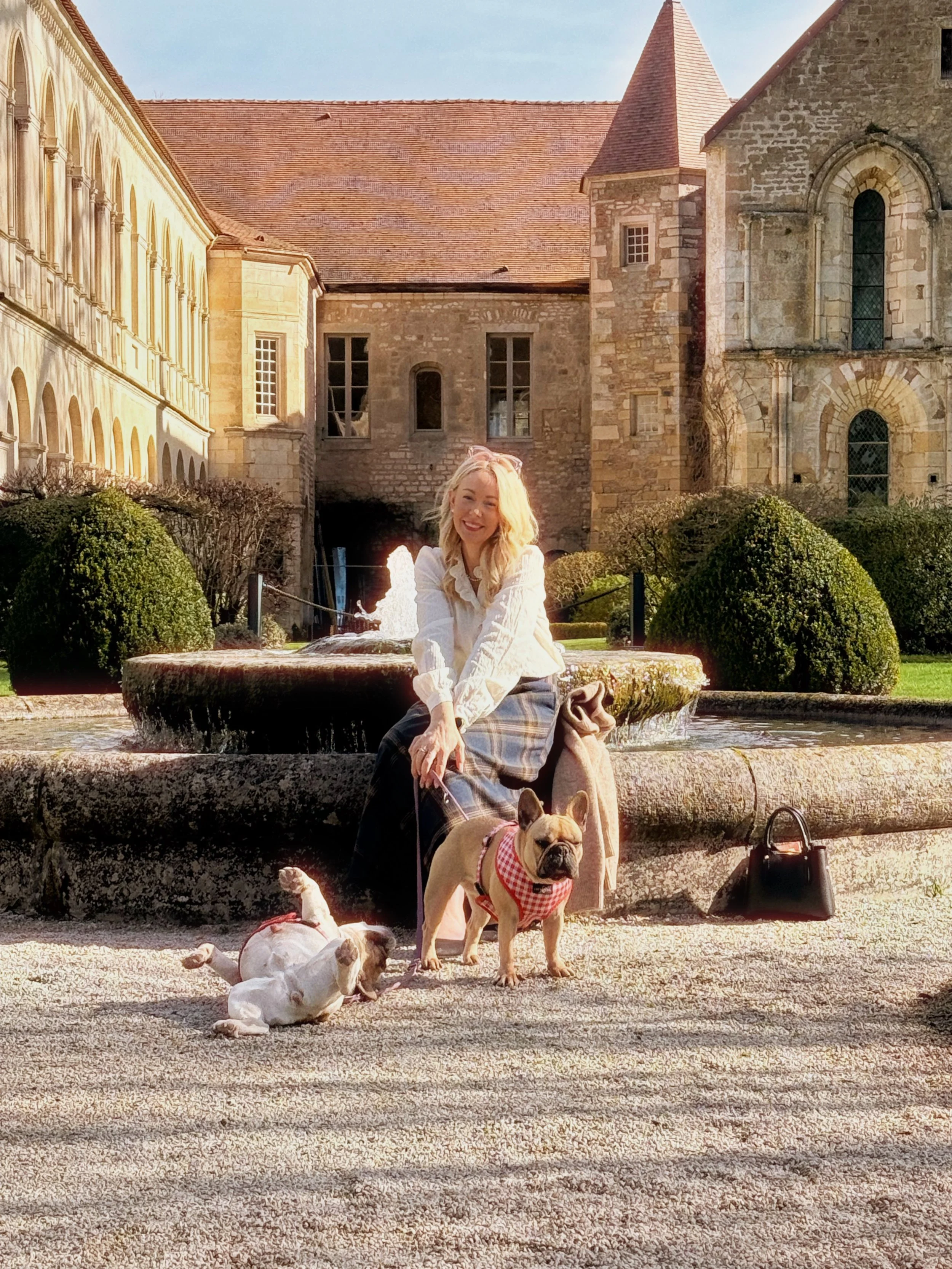
A lovely couple from Spain offered to take a photo of the girls and me. We were the only ones in the entire garden at that point.
In 1981, it was designated a UNESCO World Heritage Site because it is one of the oldest preserved Cistercian abbeys in Europe and an exceptionally complete example of early monastic architecture.
What struck me most was not just the buildings. It was the scale of quiet and calm, down to your spirit. You walk through the cloister and hear almost nothing. The valley surrounds you. The water still runs through the grounds. Even in what would be considered high season, I was told there is a steady but manageable flow of visitors.
I asked about peak summer crowds. The woman at the entrance told me that even at its busiest, it never feels overwhelming.
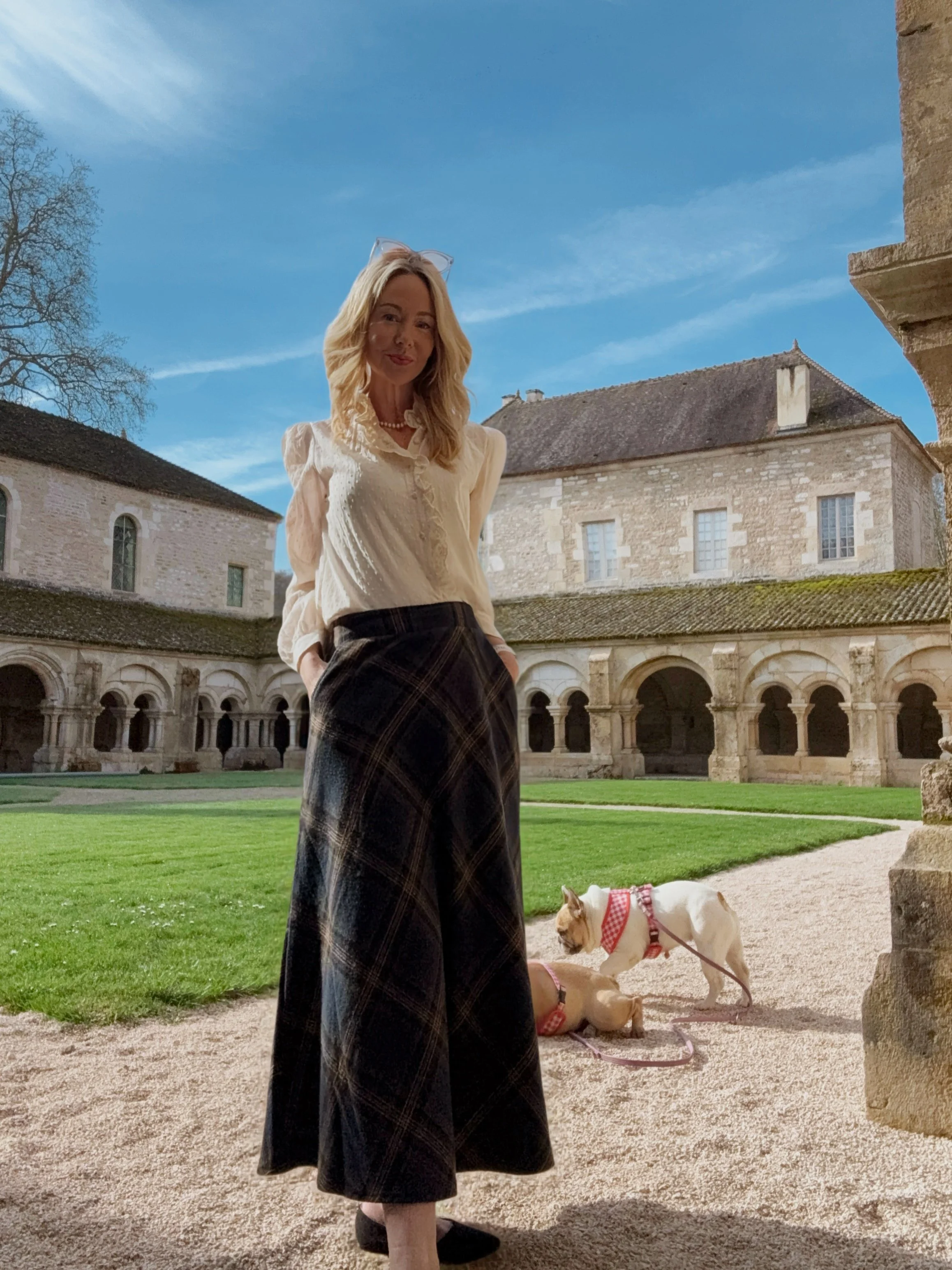
Quite honestly, the abbey alone justified the drive to Burgundy.
The Afternoon Rhythm
After several hours wandering the grounds, filming, photographing, and simply sitting in different corners of the property, I drove back toward the cottage.
For lunch, I shared that huge gougère with the girls. It was absurdly oversized. A proper Burgundian cheese puff.
Then we took our now-familiar walking path — the one I had scoped out the day before to ensure it was safe during chasse season and away from fast-moving rural roads.
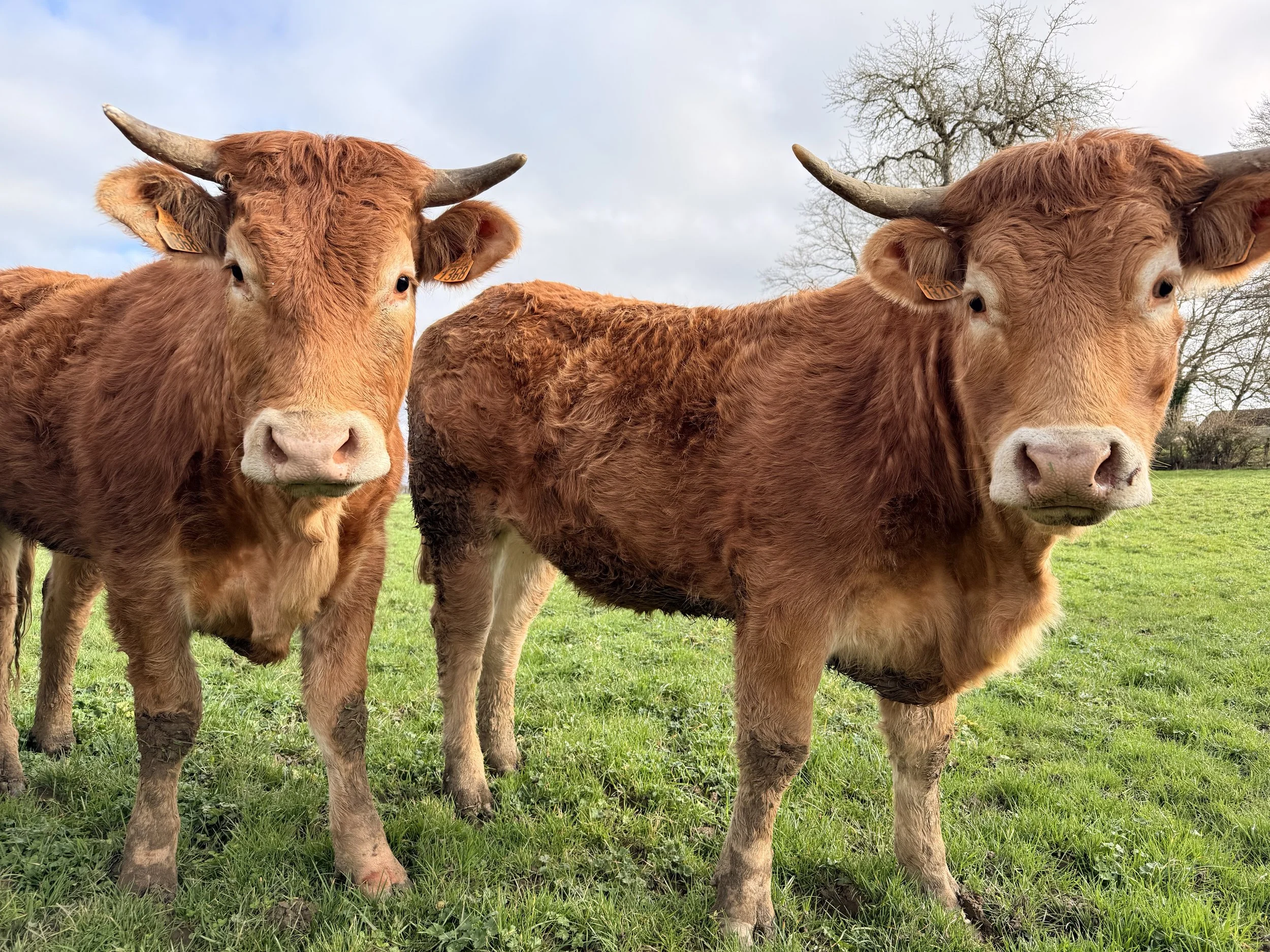
Even the local cows were getting to know us!
And the rest of the afternoon was exactly what I had planned:
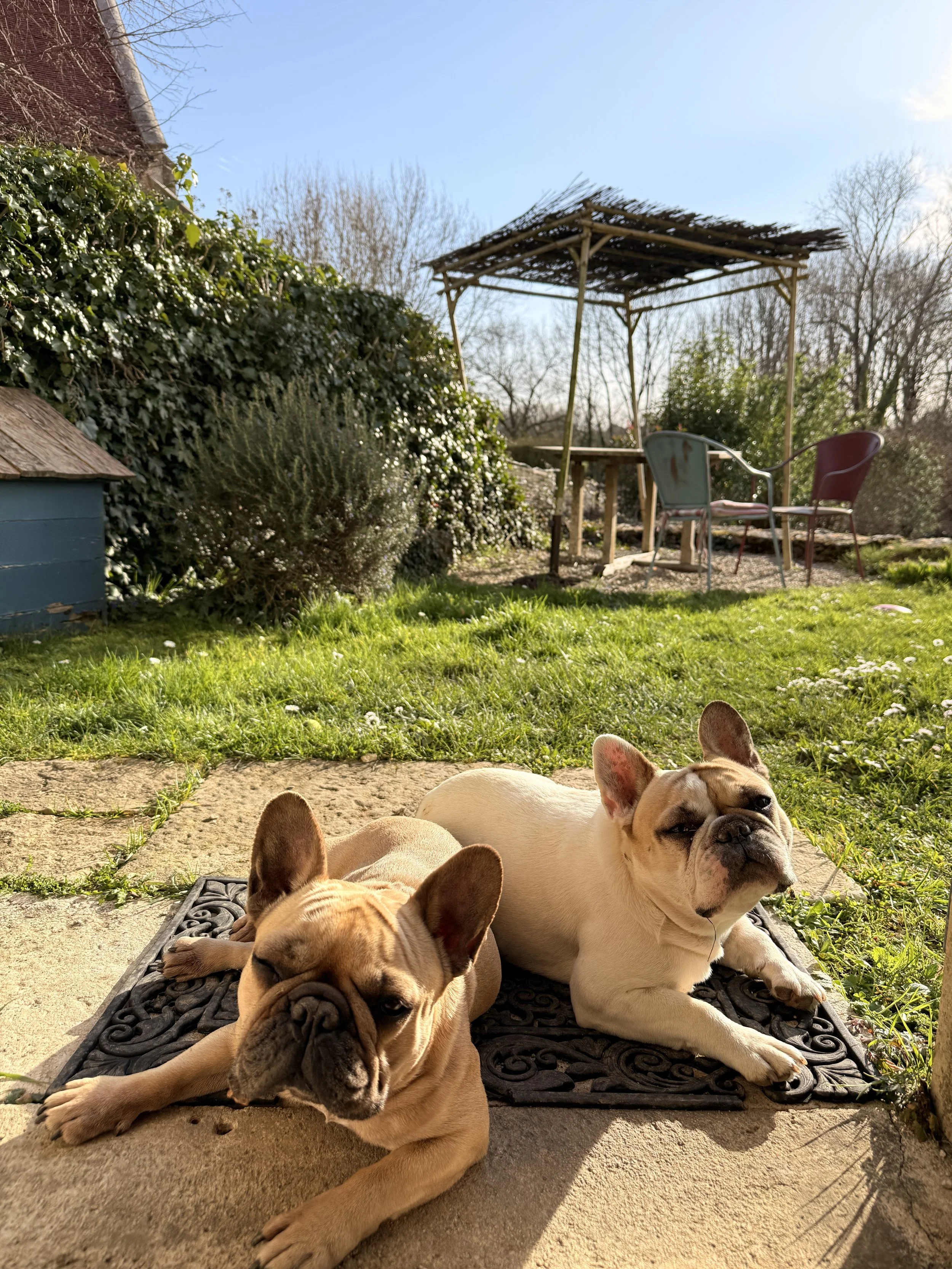
Back in the garden
Reading
Music playing softly
No schedule
No obligations
By structuring the day this way, outing in the morning, home in the afternoon, I protected both the dogs’ health (from the afternoon sun exposure - we aren’t used to it yet!) and my own energy.
Two Nearby Stops I Would Add to This Burgundy Itinerary
While my own stay became much quieter than originally planned, there were two nearby places that remained on my shortlist and that I would still confidently recommend adding to a similar itinerary: Château de Bussy-Rabutin and Semur-en-Auxois. Both fit beautifully into this part of Burgundy and both offer exactly the kind of historical depth that makes a countryside escape feel more layered and memorable.
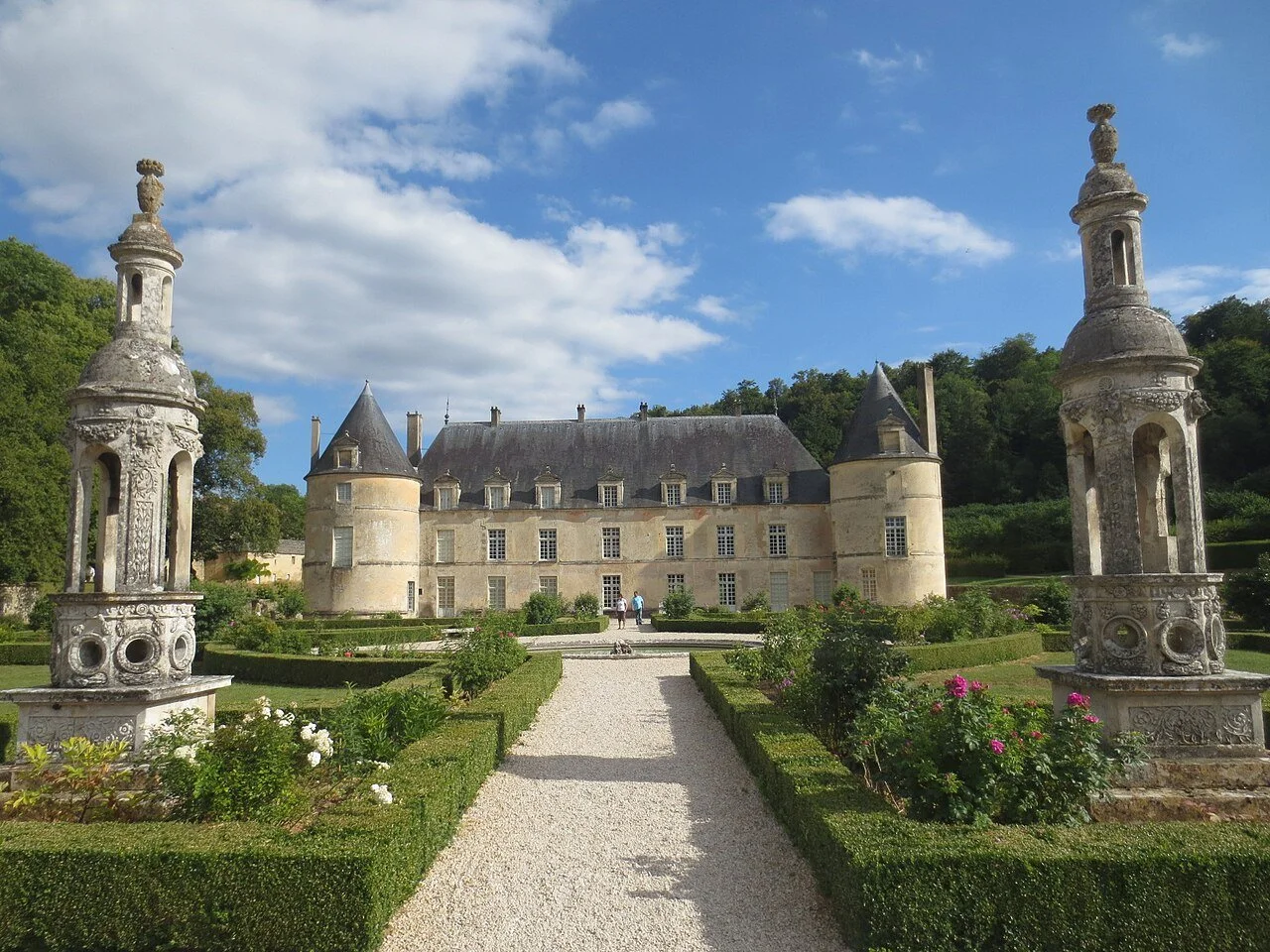
Château de Bussy-Rabutin
The château sits in the Auxois and is now part of the Centre des monuments nationaux, which is always a reassuring sign for me when I’m researching places to visit. The estate began as a medieval stronghold before being reshaped during the Renaissance, and it became most closely associated with Roger de Rabutin, Comte de Bussy, a 17th-century courtier and writer linked to the world of Louis XIV. He is still the defining figure of the château today.
What makes the site especially interesting is that it is not simply another pretty château with period furniture. Bussy-Rabutin turned his residence into a highly personal, almost theatrical project. After falling out of royal favor and being exiled from court, he transformed the château into a place that reflected both his literary mind and his very strong opinions about the social world he had left behind. The interiors became famous for their painted decorations, portraits, inscriptions, and references to court society, giving the house an unusually intimate, autobiographical quality. The official monument site even describes it as the residence of one of Louis XIV’s most flamboyant courtiers.
That, to me, is what makes it worth including on an itinerary. It offers more than architecture. It gives you character, ego, exile, literature, and court culture all in one place. If you have already seen the better-known Loire châteaux and want something with a stronger psychological imprint, this is exactly the kind of visit that feels rewarding. It is also well positioned geographically for anyone staying in this part of Burgundy and looking for a half-day outing with real substance.
WEBSITE for tickets, hours and details.
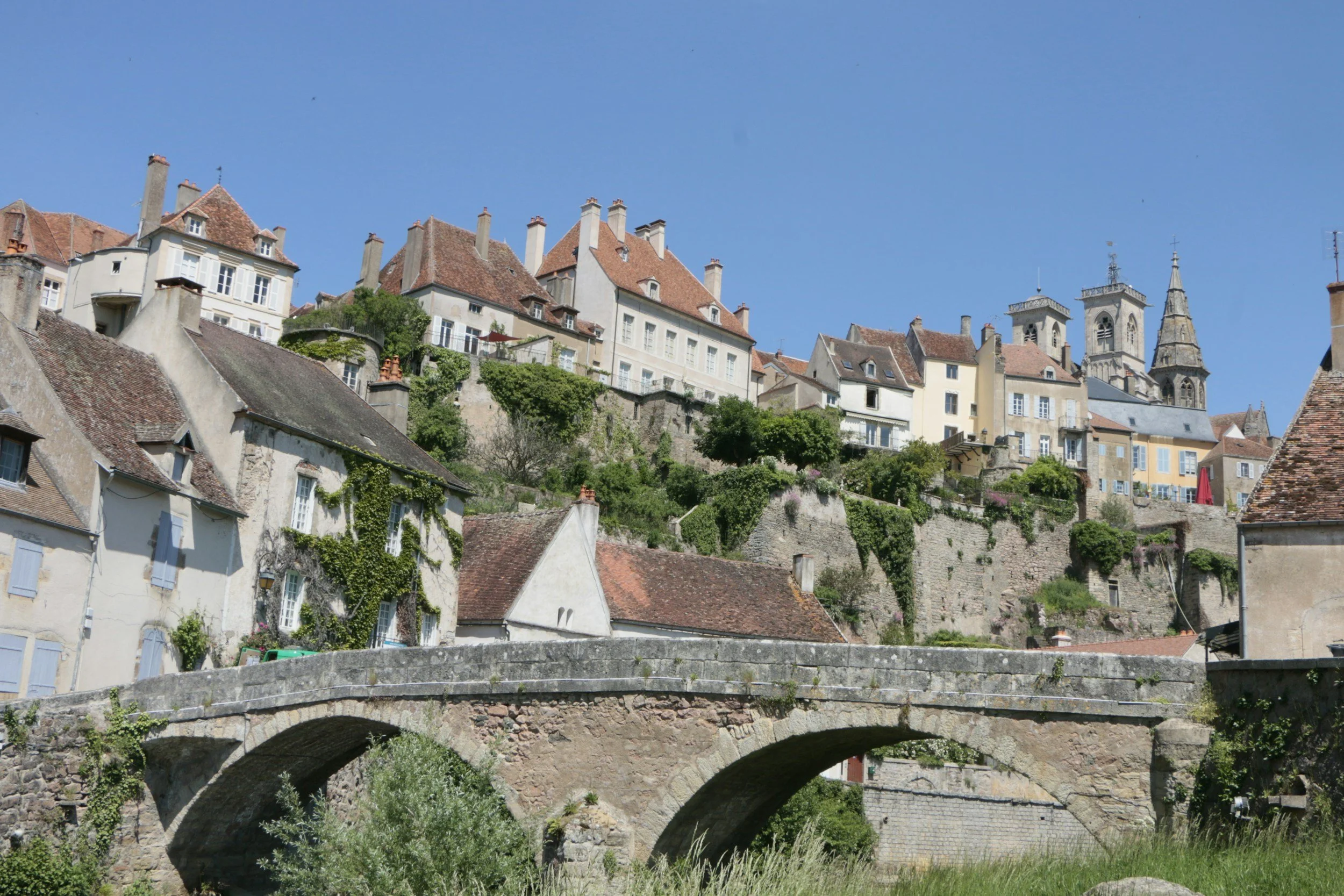
Semur-en-Auxois
If Château de Bussy-Rabutin gives you a portrait of one man and his world, Semur-en-Auxois gives you the broader medieval setting.
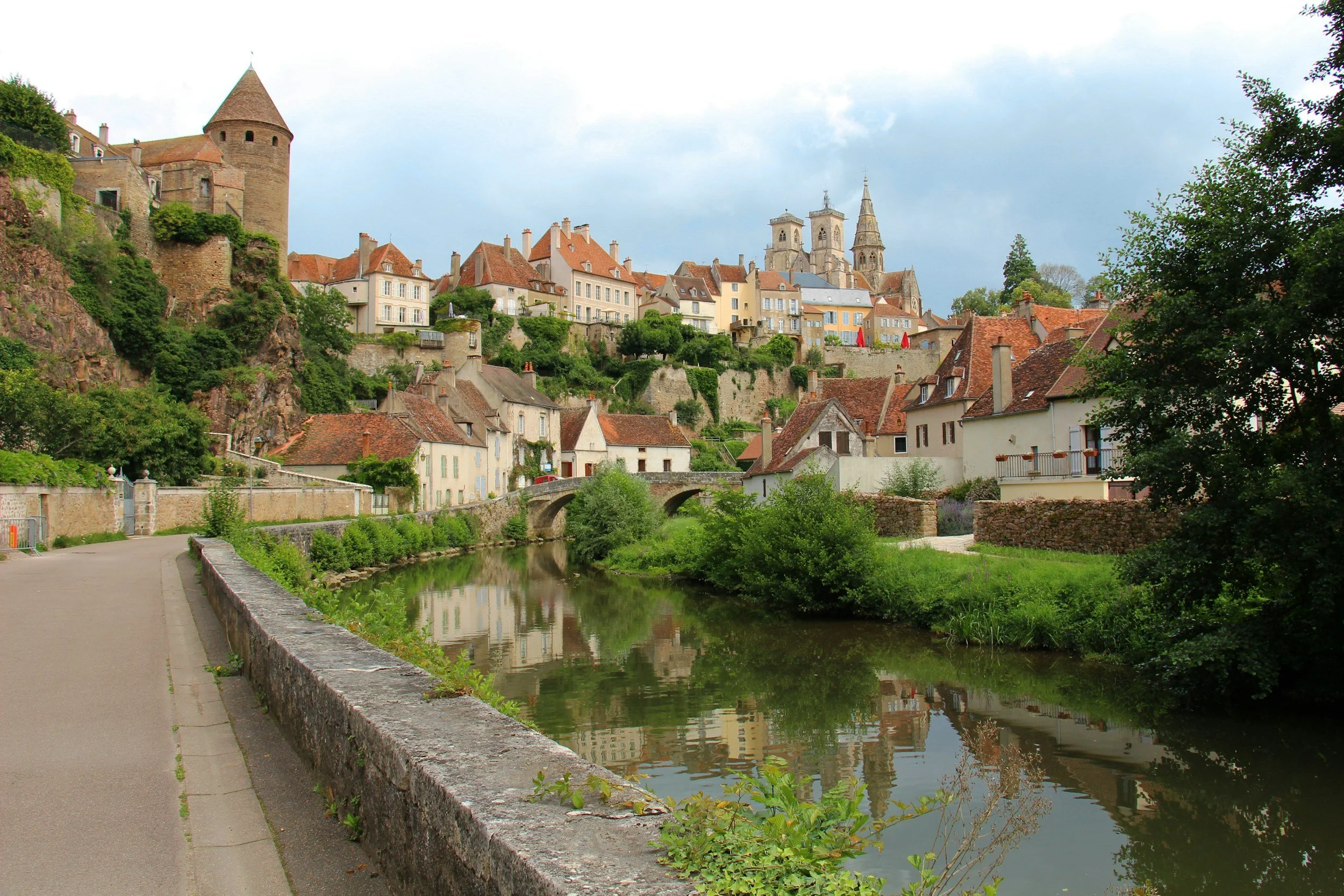
Semur-en-Auxois is widely presented by local and regional tourism authorities as one of the heritage highlights of the area. It is recognized as a Site Patrimonial Remarquable, and much of its appeal comes from the way the town still reads as a fortified medieval settlement: narrow streets, towers, ramparts, gates, and a dramatic position above the Armançon valley. Regional tourism materials describe it as a city built from a remarkable natural defensive site, with a keep, fortifications, historic center, and the Gothic Collégiale Notre-Dame as key elements of interest.
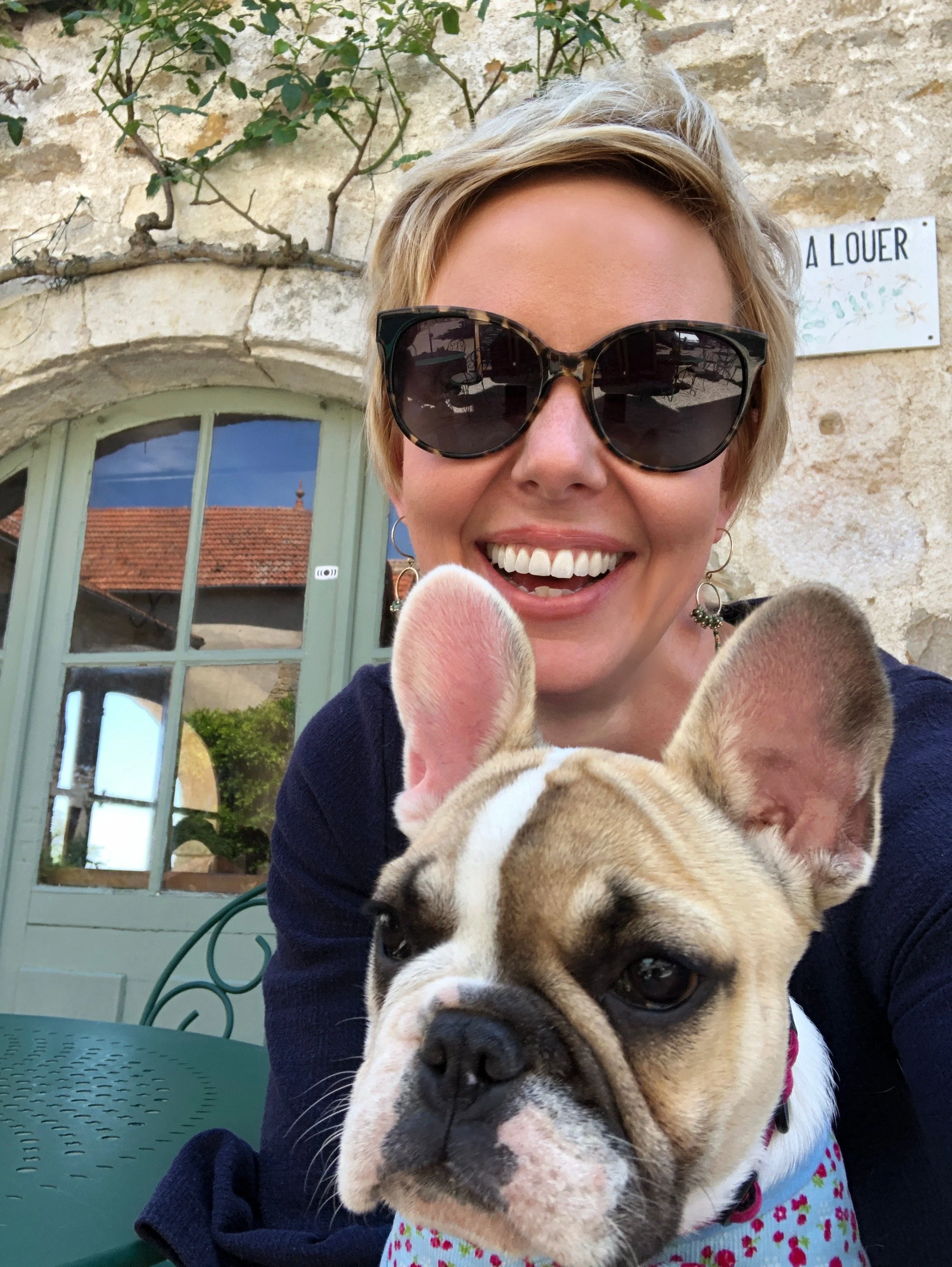
Pearl and I in Semur when she was about 5 months old. I used to bring my guests here when I was living in Beaune.
This is the kind of town I would recommend to someone who wants a slower, more atmospheric outing rather than a single-ticket monument visit. You can walk it, pause, look at details, and let the town itself be the experience. The setting matters here. Semur is built on a rocky promontory encircled by a bend in the river, which helps explain both its defensive history and its visual impact. It is one of those places where the topography and the architecture still make sense together.
The Collégiale Notre-Dame is one of the major reasons to go. The church was built between the 13th and early 14th centuries, with later additions, and it was restored in the 19th century by Viollet-le-Duc. It contains an important artistic heritage, including stained glass from multiple centuries and notable sculpture. Even if you are not setting out on a strictly religious or architectural itinerary, it is the kind of building that anchors the town historically and visually.
What also makes Semur useful in a practical sense is that it balances history with ease. It is not just “something to see”; it is the sort of town where you can spend a few hours walking, browsing, and stopping for lunch without needing a rigid plan. For travelers building a Burgundy stay around smaller villages and rural properties, that kind of adaptable outing is valuable.
Why I Would Include These Two Together
If you are staying in this part of Burgundy and want to build a thoughtful but manageable itinerary, these two places complement each other well.
Château de Bussy-Rabutin is best for:
travelers who enjoy biography, court history, and unusual château interiors
anyone looking for a more distinctive alternative to the standard château circuit
Semur-en-Auxois is best for:
travelers who want a historic town experience rather than a single monument
anyone who enjoys walking through a place and letting the architecture, streets, and views shape the visit
Together, they would round out this area beautifully: one more intimate and personality-driven, the other broader and more atmospheric.
I hope this mini-series inspires you to travel and explore more of the REAL side of France - not Versailles, not Nice, not Provence… but the countryside that truly is authentic France.